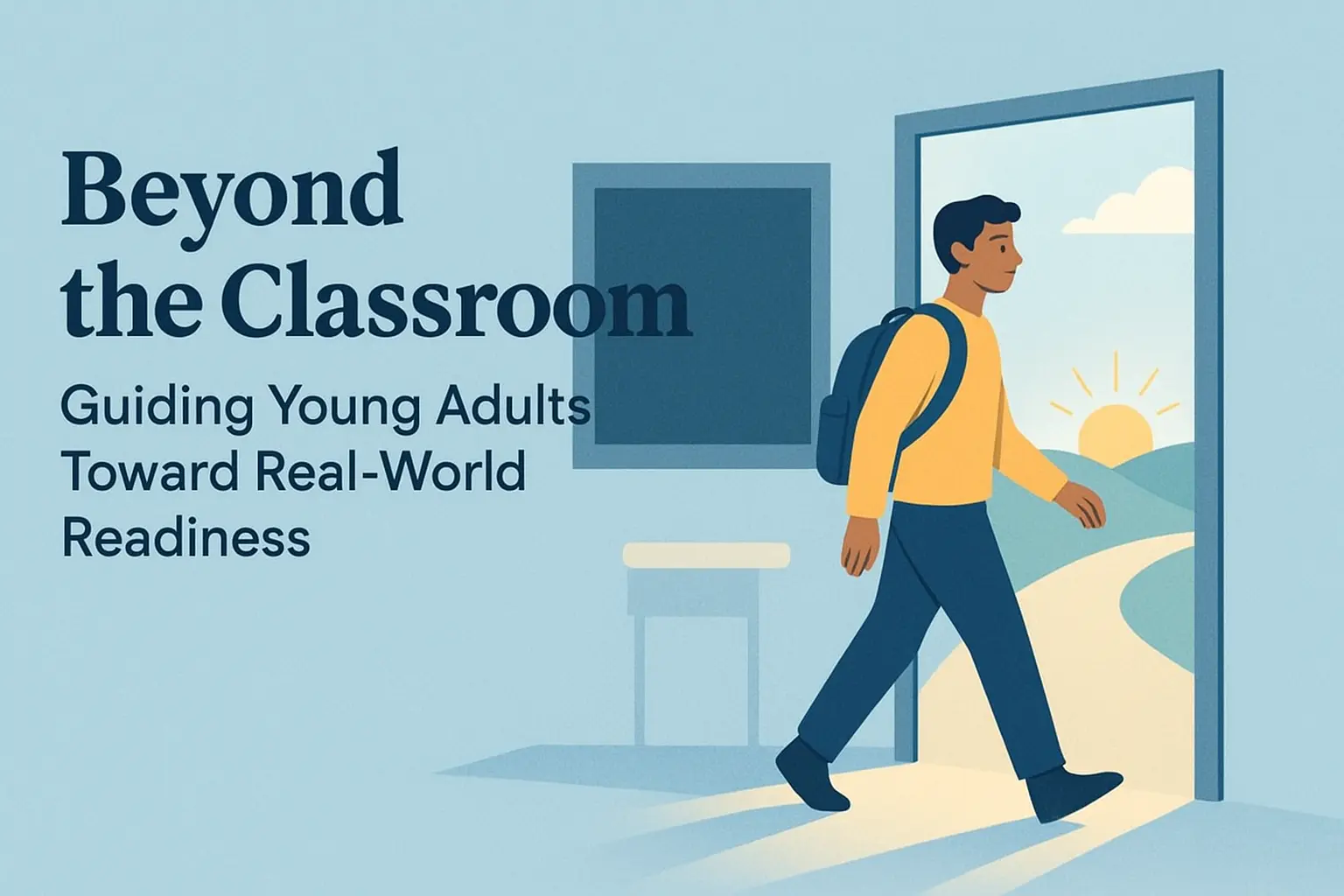
Beyond the Classroom: Guiding Young Adults Toward Real-World Readiness
Education is often seen as the golden key to success. Yet, when high school or college graduates step out into the world, many discover that the key doesn’t always fit. Despite years of schooling, they often feel unprepared for the complexities of adult life — from managing responsibilities to making meaningful career and life decisions.
The truth is, real-world readiness isn’t built through grades or tests alone — it’s developed through experience, self-awareness, and guidance that goes beyond the classroom.
1. The Gap Between Academic Success and Life Skills
Today’s education system places a heavy emphasis on academic achievement — test scores, college applications, and measurable outcomes. While these are important, they often leave little room for developing crucial life skills such as:
Emotional intelligence
Problem-solving and adaptability
Self-awareness and communication
Financial literacy
Resilience and decision-making
Without these skills, even the most academically gifted students can struggle to navigate real-world challenges confidently.
2. Why Real-World Readiness Matters More Than Ever
We live in an era of rapid change — technology evolves daily, career paths shift, and societal expectations continue to expand. Young adults entering this environment need more than knowledge; they need clarity, confidence, and emotional resilience.
In fact, research shows that many young people feel anxious or uncertain about their future because they lack guidance on how to apply what they’ve learned in real life. Bridging this gap is essential to help them transition smoothly from dependence to independence.
3. The Role of Parents, Educators, and Mentors
Preparing young adults for life requires collaboration between schools, families, and mentors. Here’s how each can make an impact:
✅ Parents: Encourage autonomy. Let teens make choices and experience natural consequences in a safe environment.
✅ Educators: Incorporate real-world learning — projects, community involvement, and practical problem-solving — into lessons.
✅ Mentors and Coaches: Offer perspective. Help young adults identify their values, strengths, and goals so they can make confident life decisions.
When young people are supported in exploring who they are, they build not only skills but self-trust.
4. Building Readiness Through Programs Like “Prepare to Launch”
The Prepare to Launch Program, developed by Rachael Schaller, MA, MSc, was created to fill this very gap. Designed for teens and young adults, it helps participants:
Explore personal strengths and interests
Develop emotional awareness and coping tools
Create a Plan Towards Independence (PTI) for adulthood
The result? A generation of young adults who are not just educated — but equipped for life.
5. Beyond Knowledge — Toward Confidence and Purpose
Being “ready” for the real world isn’t about having all the answers. It’s about having the mindset, tools, and confidence to find them.
When we guide young adults beyond the classroom — toward self-awareness, resilience, and authentic purpose — we prepare them not just for success, but for fulfillment. 🌱
Conclusion
True education doesn’t end at graduation — it begins where curiosity meets real life.
By helping teens and young adults connect learning with living, we empower them to navigate adulthood with confidence, clarity, and courage.
Because the goal isn’t just to survive the real world — it’s to thrive in it.